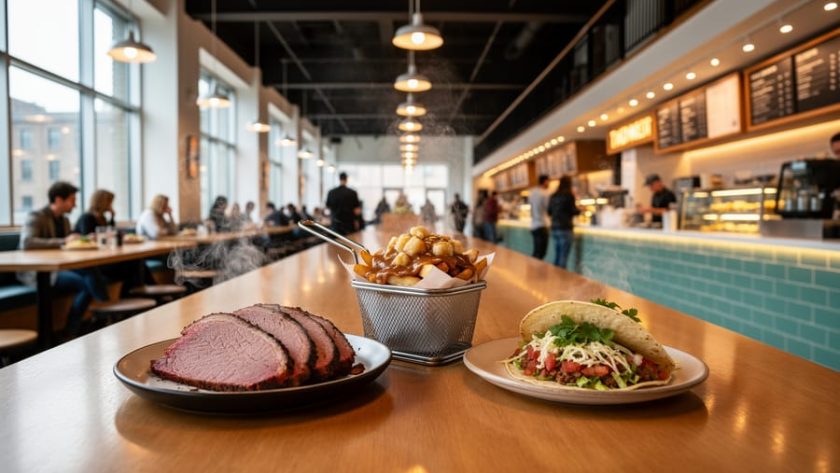
Montreal’s food halls bring together the city’s best independent vendors under one roof, giving you a curated dining experience that saves time and delivers variety. Instead of mapping out separate restaurant visits across neighborhoods, you can sample everything from smoked meat to fusion tacos to artisan pastries in a single stop. These modern marketplaces showcase local chefs and specialty food makers, often at price points lower than traditional sit-down restaurants, making them ideal for travelers who want authentic Montreal flavors without the commitment of a full meal or multiple reservations.
The city’s food hall scene has matured significantly since 2020, with established venues refining their vendor lineups and new spaces opening in revitalized neighborhoods. Unlike traditional food courts, these halls prioritize quality over convenience, featuring rotating menus, craft beverages, and communal seating that encourages lingering. Most stay open later than typical restaurants, with some serving until midnight on weekends, giving you flexibility whether you’re grabbing lunch between meetings or looking for a casual dinner spot after exploring Old Montreal.
What sets Montreal’s food halls apart is their bilingual atmosphere and the mix of Quebecois classics alongside international cuisines. You’ll find poutine vendors next to Vietnamese banh mi stalls, reflecting the city’s multicultural identity in a way that single-cuisine restaurants can’t match.
Why Visit Montreal’s Food Halls
Montreal food halls solve a common traveler dilemma: you want authentic local food without spending hours researching restaurants or risking a disappointing meal. These curated spaces gather the city’s best street food and casual dining vendors under one roof, letting you experience Montreal’s diverse gastronomy scene in a single visit.
For busy professionals with limited time, food halls deliver several practical advantages:
- Sample multiple cuisines in one location without traveling between neighborhoods
- Browse vendors visually before committing, reducing decision paralysis
- Enjoy vetted, quality-controlled options from established local operators
- Skip the weather concerns with year-round indoor comfort
- Accommodate groups with different tastes easily since everyone chooses independently
The vetting process matters here. Unlike generic food courts, Montreal’s food halls typically curate their vendors, selecting established chefs and popular local concepts. You’re getting the street food experience with built-in quality assurance, which matters when you’re in town for three days and can’t afford a mediocre meal.
Food halls also adapt to your schedule. Most operate extended hours with flexible seating, so whether you need a quick lunch between meetings or a relaxed dinner after sightseeing, you’ll find options. No reservations required, no pressure to order multiple courses, and you can leave when you’re ready. It’s efficient dining that doesn’t sacrifice the authentic Montreal food experience you came for.
Top Montreal Food Halls to Visit
1. Time Out Market Montréal
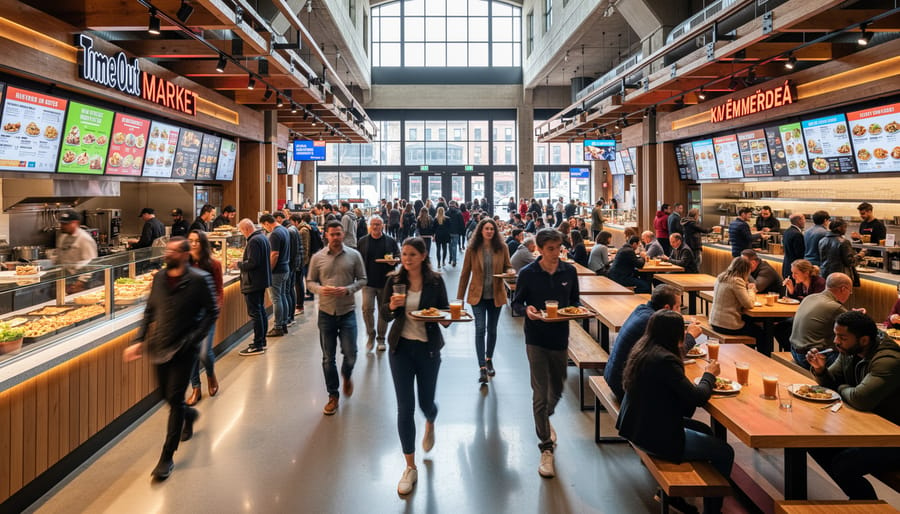
Time Out Market Montréal occupies prime real estate in the downtown Eaton Centre, bringing 16 handpicked local chefs and restaurants under one roof. The curation process is rigorous, the Time Out editorial team selects vendors based on quality and reputation, essentially creating a greatest-hits compilation of Montreal’s dining scene. You’ll find stations from established names like Arthurs Nosh Bar (Jewish deli fare), Foiegwa (upscale sandwiches), and Le Taj (Indian cuisine), alongside rotating pop-ups that showcase emerging talent.
The layout makes decision-making straightforward: walk the perimeter to survey all options before committing, then order directly at vendor counters. Most dishes range from $12 to $25, and you can mix cuisines at your table, one person ordering poutine while another gets ramen works perfectly here. The central seating area accommodates 400 people, though arrive before noon or after 1:30 p.m. to avoid the lunch rush.
What sets this venue apart is the quality threshold. Every vendor represents best Montreal street food or restaurant concepts without requiring reservations or multi-stop logistics. The bright, modern space stays open until 10 p.m. most evenings, and the Eaton Centre location means you’re steps from the McGill metro station. For travelers with limited time, this concentration of vetted options eliminates research paralysis, you physically cannot make a bad choice here.
2. Le Central
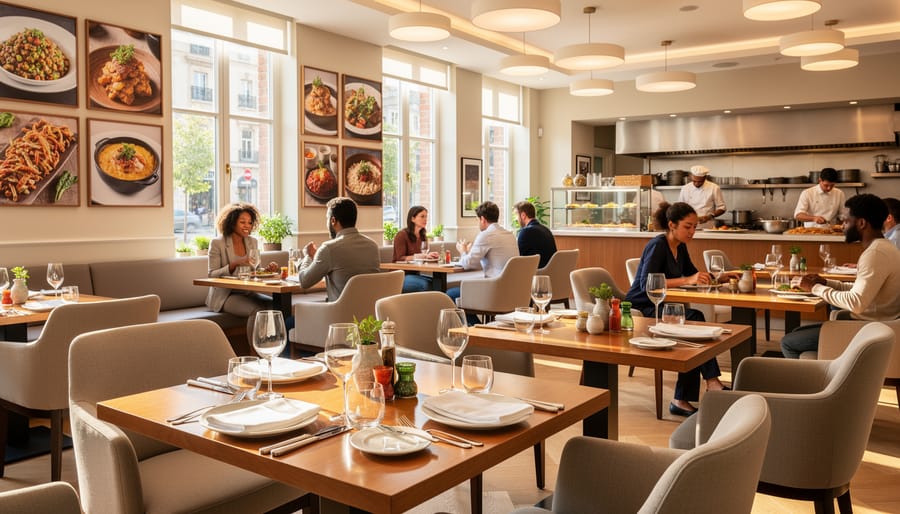
Located steps from Montreal’s financial district at Place Ville Marie, Le Central brings together 15 food vendors under a skylit concourse that feels less like a food court and more like a curated indoor market. The setup is straightforward: vendors line the perimeter while communal seating fills the center, creating a buzz that peaks between 12 and 1:30 PM on weekdays when office workers flood in.
The vendor lineup rotates occasionally but typically spans Vietnamese banh mi, Korean bibimbap, Montreal-style smoked meat, fresh poke bowls, wood-fired pizza, and Middle Eastern grilled meats. Unlike traditional food courts where everything tastes institutional, each stall here operates with restaurant-level quality, many are offshoots of established Montreal eateries testing new concepts or serving simplified versions of their signature dishes.
What makes Le Central work for travelers is the hybrid approach. You can grab a $12 banh mi and eat standing at a high table if you’re pressed for time, or settle into proper seating with a $18 ramen bowl and actually relax. Most vendors prepare food to order rather than keeping it under heat lamps, so expect a 5-10 minute wait during rushes.
Weekday lunches are intense with downtown workers; visit after 1:30 PM or opt for dinner (open until 9 PM most nights) for easier browsing. Weekend crowds thin considerably, though a few vendors close Sundays. Payment is vendor-specific, most take cards, but carry some cash for the occasional cash-only stall.
3. Marché Artisans at Atwater Market
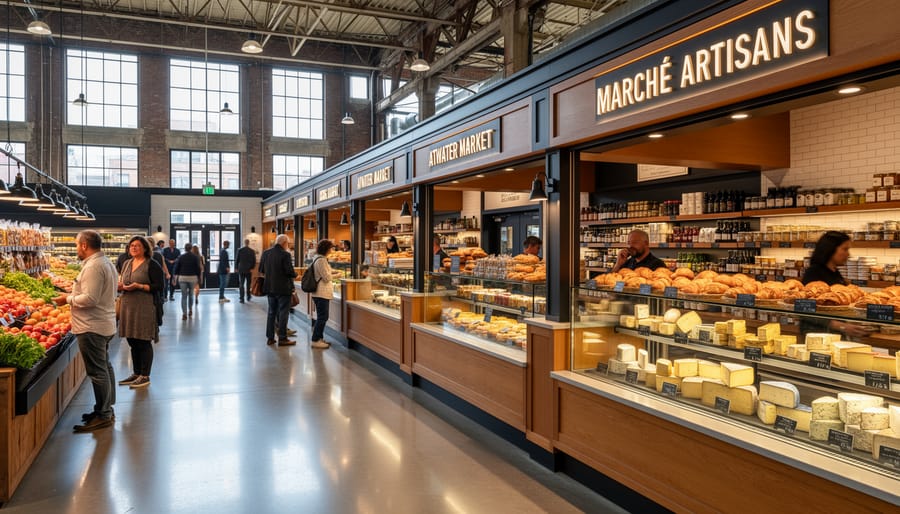
Marché Artisans operates as a permanent food vendor section within Atwater Market, one of Montreal’s most beloved historic markets since 1933. Unlike typical food halls with restaurant-style seating, this space blends market shopping with ready-to-eat options, giving you an authentic local experience alongside practical convenience.
The vendor mix leans heavily on Quebec producers and artisans. You’ll find prepared foods ranging from rotisserie chicken and fresh sandwiches to warm quiches and seasonal soups, all made on-site by vendors who often source ingredients from the market’s surrounding stalls. Grab a wood-fired pizza from one counter, then pick up local cheese and charcuterie from another to assemble your own picnic.
What sets Marché Artisans apart is the hybrid shopping-dining experience. You can eat immediately at communal tables or take food to the nearby Lachine Canal for a waterfront meal. Many vendors offer both grab-and-go packaging and items to cook later, making it ideal if you’re staying somewhere with a kitchen.
The market opens early (most vendors start by 7 AM on weekdays), making it viable for breakfast or lunch before other food halls open. Expect a genuine neighborhood atmosphere rather than a polished tourist venue. Locals shop for groceries while visitors sample prepared foods, creating an unpretentious environment where you’re experiencing Montreal’s food culture as residents do, not through a curated lens.
4. Station Ho.st
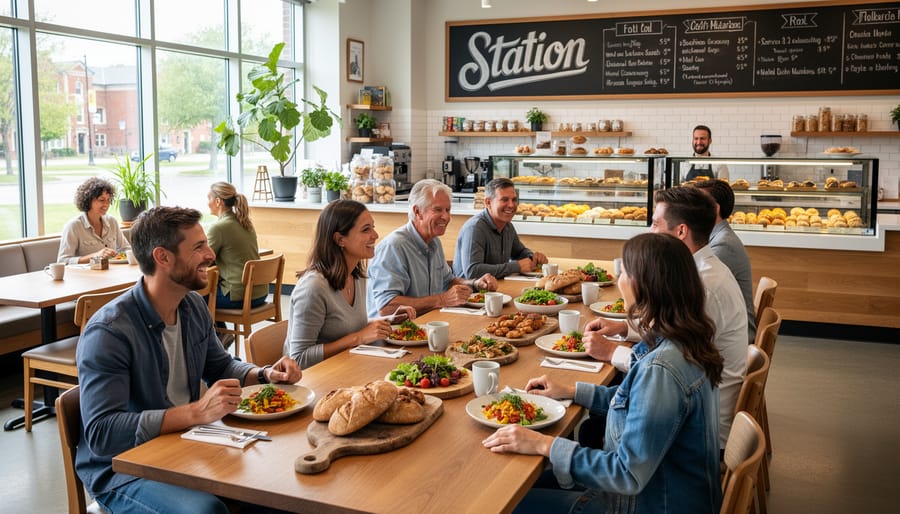
Station occupies a converted industrial space in Griffintown, a former working-class neighborhood that’s become one of Montreal’s most dynamic districts for dining and nightlife. Unlike traditional food halls with permanent tenants, Station operates on a rotating residency model, local chefs and food entrepreneurs take over the kitchen for limited runs, typically three to six months. This setup gives emerging Montreal talent a low-risk platform to test concepts before opening brick-and-mortar restaurants.
The space hosts two to four vendors at a time, with menus changing as residencies cycle through. You might find everything from Georgian khachapuri to Haitian griot to plant-based takes on Quebecois classics, depending on when you visit. The rotating model means repeat visitors discover something new each time, though it also requires checking current lineups before you go, Station maintains updated vendor schedules on social media.
Beyond food, the venue programs art exhibitions, live music, and community events in its open-plan dining area. The atmosphere leans casual and creative rather than polished, with communal tables and an intentionally unfinished aesthetic that reflects its warehouse roots. For travelers, Griffintown itself offers appeal, walkable to Old Montreal and the Lachine Canal, with a concentration of craft breweries and design shops that make it worth exploring beyond the meal.
Station works best for visitors who want to support Montreal’s independent food scene and don’t mind a less predictable menu experience.
5. Marché Adonis Food Court
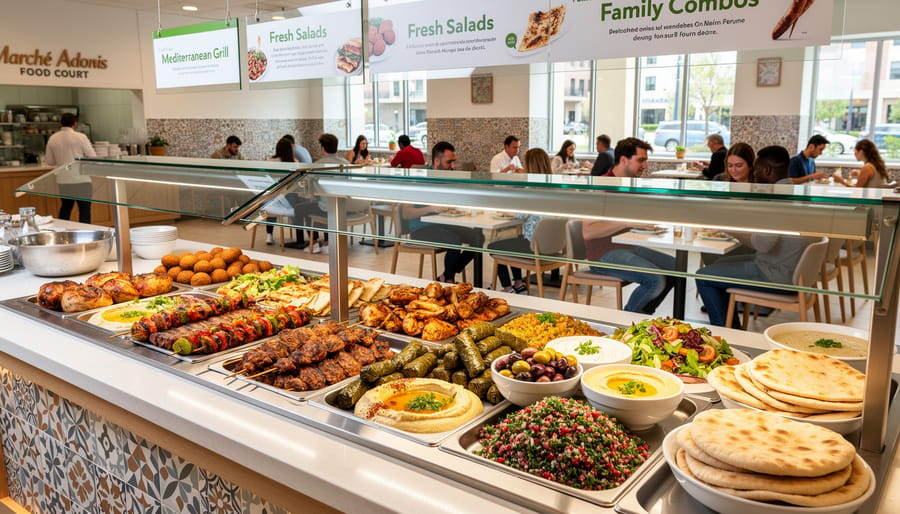
Tucked inside the Adonis supermarket on Sauvé Street West, this food court delivers some of Montreal’s most authentic Middle Eastern street food at prices that feel almost too good to be true. Unlike typical food halls, Marché Adonis operates as a grocery store destination first, which means the food court benefits from direct supplier relationships and incredibly fresh ingredients.
The setup is straightforward: order at the counter, grab a number, and wait for your name. The menu focuses on Lebanese classics, shawarma plates, falafel wraps, grilled kafta, and fresh manakeesh flatbreads baked throughout the day. Portions are generous, and most meals run between $8-12, significantly less than downtown options. The hummus alone justifies the trip, prepared in-house with the kind of texture and tahini balance you’d find in Beirut markets.
What makes this a hidden gem is the dual experience. You can shop for Mediterranean groceries, fresh pita, imported spices, and pastries after eating, creating a complete culinary immersion. The atmosphere is no-frills, functional seating, grocery store ambiance, but the food quality and value outweigh any aesthetic compromises. For travelers staying in neighborhoods with kitchen access, pairing a meal here with grocery shopping delivers exceptional return on your food budget.
Practical Information for Visiting

Most Montreal food halls cluster in central neighborhoods with straightforward metro access. Time Out Market sits inside the Eaton Centre at McGill metro (Green Line), while Le Central is a short walk from Place-d’Armes (Orange Line). Atwater Market connects directly to Lionel-Groulx metro (Green/Orange Lines), Station is near Bonaventure (Orange Line), and Marché Adonis requires a bus connection from Namur metro (Orange Line) but offers free parking for drivers.
| Food Hall | Metro Access | Average Meal Cost | Best Visit Time |
|---|---|---|---|
| Time Out Market | McGill (inside Eaton Centre) | $18-28 | Weekdays 2-4pm |
| Le Central | 5-min walk from Place-d’Armes | $15-22 | Before 11:30am or after 1:30pm |
| Atwater Market | Direct at Lionel-Groulx | $12-20 | Weekday mornings |
| Station | 10-min walk from Bonaventure | $14-24 | Tuesday-Thursday evenings |
| Marché Adonis | Bus from Namur or drive | $10-16 | Weekdays before noon |
Operating hours vary by venue. Time Out Market and Le Central follow mall hours (typically 10am-9pm weekdays, extended weekends), while Atwater Market runs 7am-6pm daily with Sunday closures for some vendors. Station operates Thursday through Sunday only, and Adonis runs 9am-9pm daily. Individual vendors within each hall may keep different schedules, so check before making a special trip for a specific stall.
All venues accept credit cards, though smaller Atwater Market vendors sometimes prefer cash. Budget 30-45 minutes for a relaxed meal or 15-20 minutes for quick takeaway. Seating fills rapidly during lunch rush (11:30am-1pm) and dinner peak (6-7:30pm). Weekday mid-afternoons offer the shortest lines and easiest table access. Most halls provide communal seating, so be prepared to share space during busy periods.
Insider Tips for Food Hall Visits
Visit during weekday lunch hours (11:30 AM to 1:00 PM) or mid-afternoon (2:30 to 4:30 PM) for the shortest lines and best vendor availability. Weekends draw heavy crowds from 12:00 to 3:00 PM and 6:00 to 8:00 PM, so adjust your timing if you prefer a calmer experience.
Share dishes among your group to sample multiple vendors without committing to full portions. Most stalls price items between $12 and $18, making it affordable to try three or four different cuisines in one visit. Before ordering, walk the entire hall to scout all vendors, resist the temptation to commit at the first appealing stall.
Check vendor schedules before your visit, especially at Station and smaller halls where some stalls rotate or take specific days off. Time Out Market maintains consistent hours across all vendors, making it the most reliable option for spontaneous visits. Ask staff about combo deals or “market specials” that bundle items from multiple vendors at a discount.
Seat yourself at communal tables rather than waiting for private booths, this speeds up your visit and reflects local food hall culture. Clear your table when finished, particularly during busy periods. Most halls accept credit cards, but a few individual vendors still prefer cash for small purchases under $10.
Common Questions About Montreal Food Halls
Do Montreal food halls accommodate dietary restrictions?
Yes, most food halls offer extensive options for vegetarian, vegan, gluten-free, and halal diets due to their multi-vendor format. Time Out Market and Le Central specifically feature vendors with clearly marked allergen information, and Middle Eastern vendors at Marché Adonis naturally provide many plant-based and gluten-free Mediterranean options.
Are food halls child-friendly?
Absolutely. The variety ensures kids find something they’ll eat, casual seating removes fine-dining pressure, and spaces like Marché Artisans at Atwater Market offer a relaxed atmosphere where children moving around isn’t an issue. Most venues have high chairs available.
Can you make reservations at food halls?
No, food halls operate on a walk-in basis with counter service at individual vendors. Seating is first-come, first-served, though you’ll rarely wait more than 10 minutes for a table during off-peak hours.
How long should you budget for a visit?
Plan 45 minutes to an hour for a leisurely meal with browsing time. If you’re rushing between meetings, you can grab food and eat in 20-30 minutes, especially at Le Central or Station where vendor lines move quickly.
How does payment and tipping work?
All vendors accept credit cards, though some smaller stalls at Marché Artisans prefer cash. Tipping practices mirror coffee shops, 10-15% is appreciated but not mandatory at counter-service vendors, and many payment terminals suggest tip amounts.
These answers align with broader time-saving travel hacks for Montreal: knowing that food halls don’t take reservations lets you skip the planning step entirely, while understanding that timing saves money means visiting between 2-4 PM often means shorter lines and the same great food. Most food halls remain open year-round, making them reliable regardless of Montreal’s weather extremes or your travel dates.
Montreal’s food halls solve the busy traveler’s dining dilemma: how to experience authentic local flavors without spending hours researching restaurants or navigating unfamiliar neighborhoods. Whether you have 30 minutes between meetings or want a leisurely evening sampling multiple cuisines, these venues deliver quality and variety in one convenient stop.
Pick one or two halls closest to your hotel or daily routes, and you’ve instantly added memorable meals to your itinerary without the guesswork. The vendors are pre-vetted, the atmospheres are welcoming, and you can adjust your pace to match your schedule. Great food experiences in Montreal don’t require elaborate planning, just knowing where the locals gather to eat well, efficiently, and often.